Reclaiming Serbia’s democracy
In the wake of a tragedy, a student uprising calls for government accountability. The journey from protests to electoral politics.
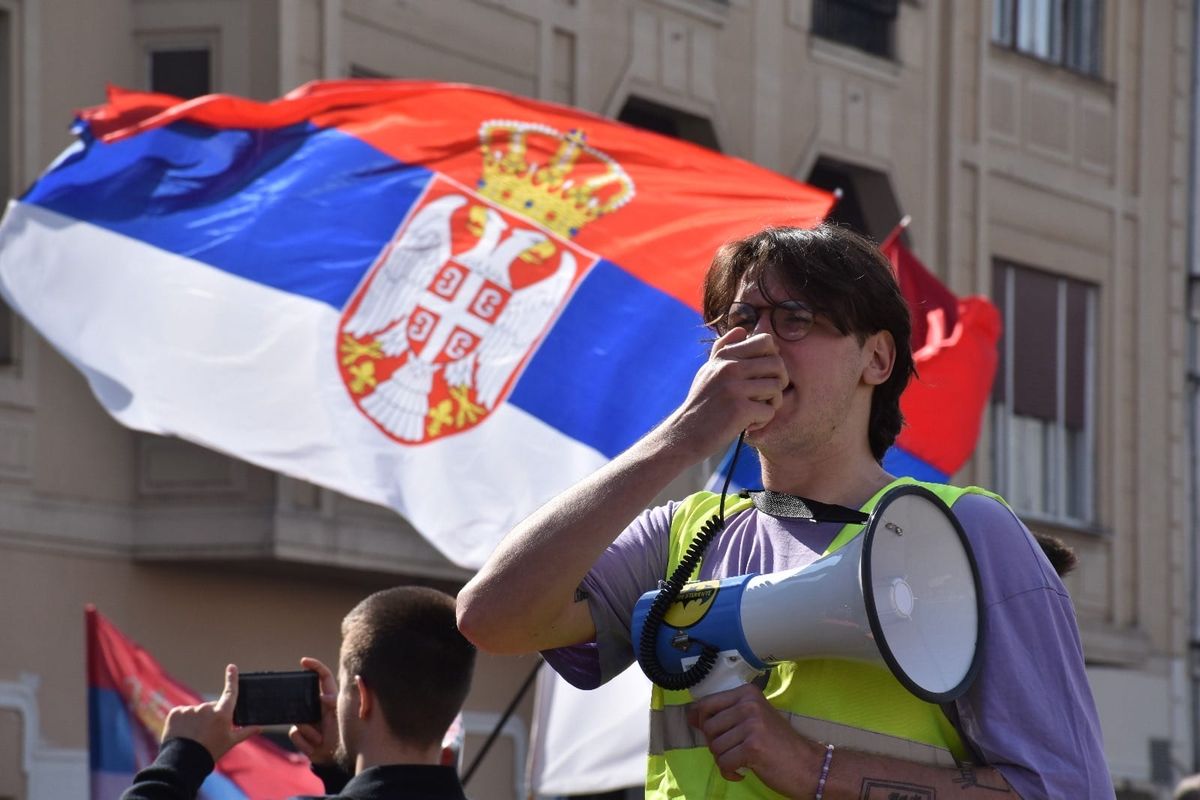
On 1 November 2024 the canopy of a newly renovated railway station in Novi Sad, Serbia, collapsed, killing 16 people in total.
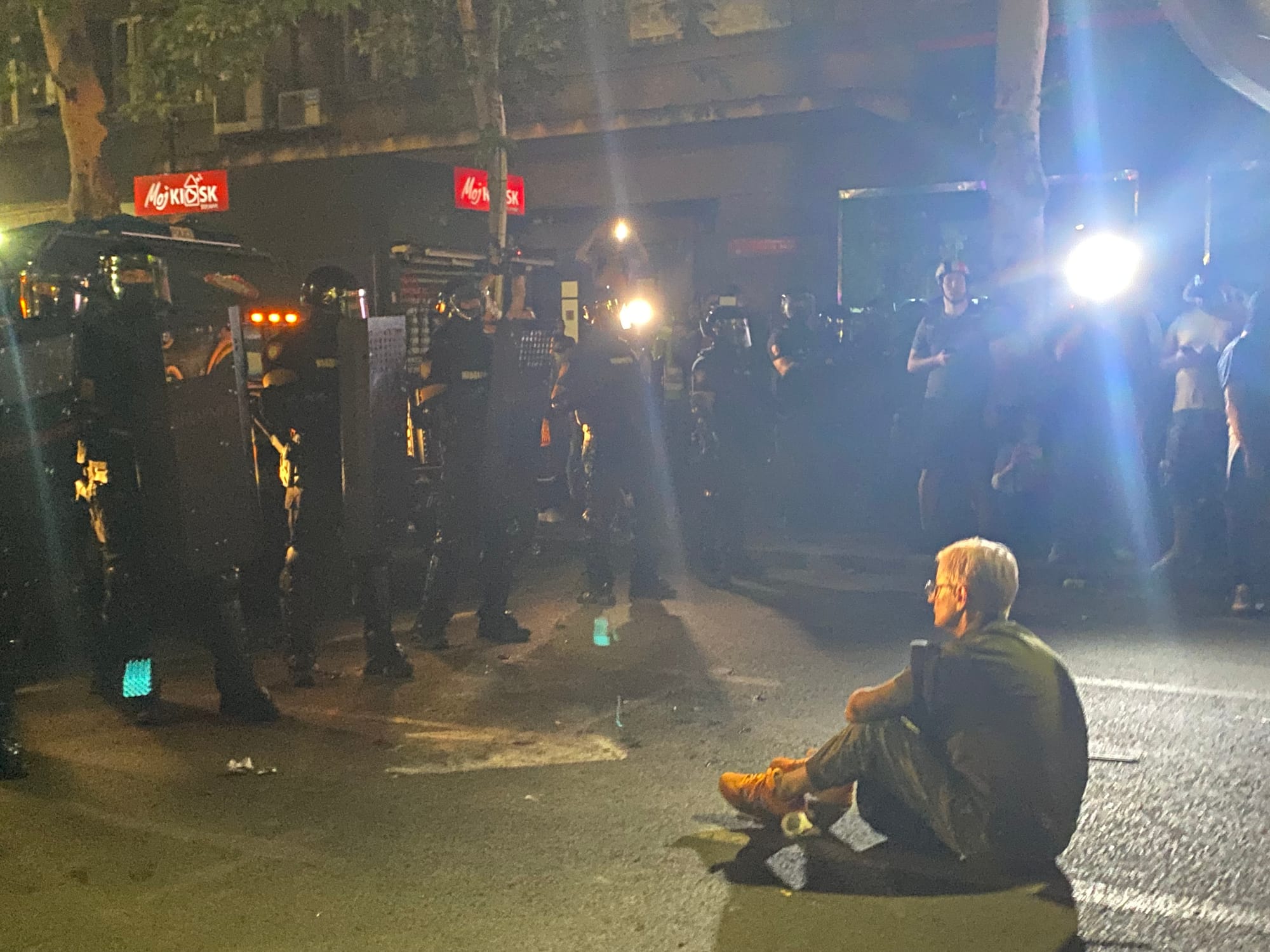
Since that day, Serbia has been in almost constant motion. There have been protests, blockades, marches and arrests. People we know have been prosecuted, exiled from the country, or simply disappeared in the midst of night for a few days before turning up again, shaken. Aleksandar Vučić and his ruling Serbian Progressive Party are not letting go without a fight.
But if there is one group that has shaped the past year more than any other, it is the students.
Serbia has an interesting habit: every 28 years, the students rise up. In 1968, it was against inequality. In 1996 and '97, against Milošević and his rigged elections. Now, 28 years later, it's happening again. Maybe that's because nothing has really changed since the 60s. We grow up being told politics are dirty, not for us, and certainly not for young people. It took us a long while to realise that this message is a government strategy. A generation that doesn't believe in politics is a generation that won't believe in accountability.
And it almost worked. Almost. Then the train station collapsed, and something broke open that could no longer be contained.
The turning point came when students at the Faculty of Dramatic Arts in Belgrade stood in silence for fifteen minutes to honour the dead. While they stood there, they were attacked. The attackers were batinaši — thugs paid by the state to beat people and spread fear. The word comes from batina: a beating.
The police did nothing, and the prosecutors remained silent. So the students took action themselves, blockading their own faculty. Classes stopped. Exams were postponed. What began as a response to an attack quickly became something much bigger.
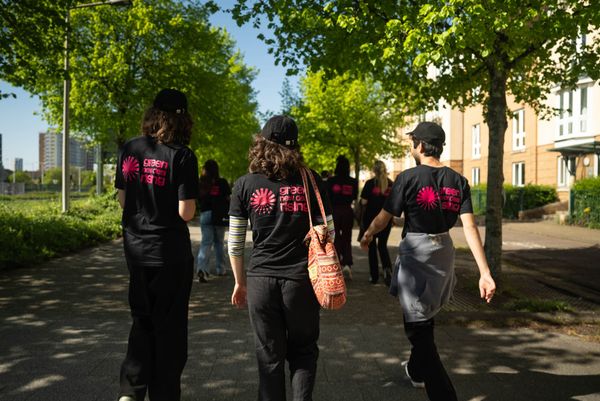
Day by day, other faculties joined – philosophy, classics, chemistry, maths. Within weeks, the blockades had spread beyond Belgrade to universities across the country. What made the model powerful was its simplicity: every faculty could decide for itself whether to join, and every new occupation demonstrated that students elsewhere were no longer willing to carry on as nothing even happened.
Building trust
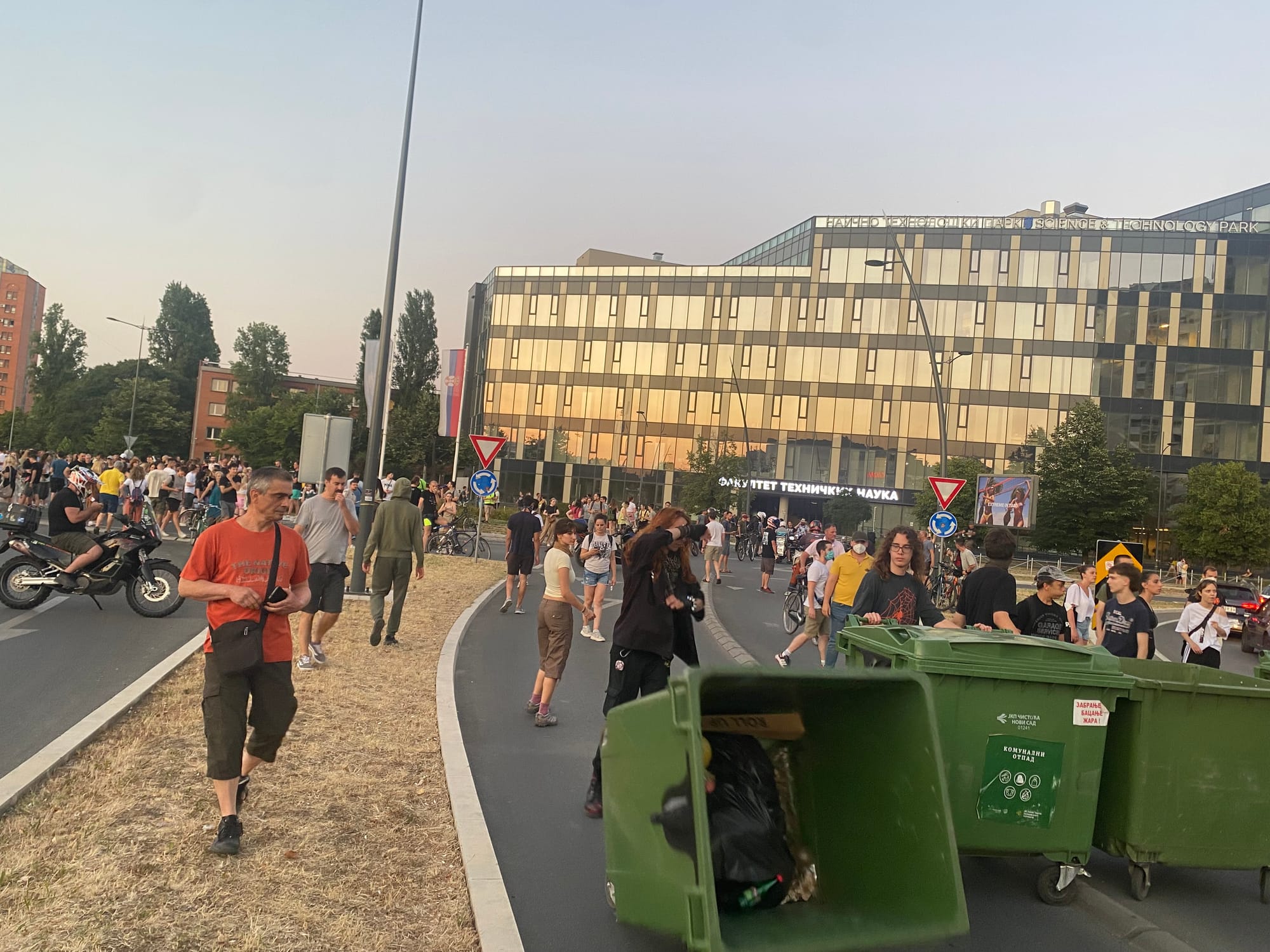
Everyone thought the blockades would last a couple of weeks. They didn't. As the movement grew, so did our tactics. We moved from occupying faculties to blockading major roads for 24 hours at a time. The government's first move in response was to try to paint us as a front for the opposition parties. We knew that if people believed that, the movement would lose much of what made it powerful.
There were good reasons to work with the opposition parties. They had the infrastructure, the contacts and the experience. But trust mattered more. So many people in Serbia had lost faith not only in the government but in politics itself. People were exhausted by lies and politicians who only appeared when they wanted something. We needed them to believe that this movement was different, and that our focus was not on winning seats, but on winning justice.
Out of everything we disagreed on — and we disagreed on plenty — one demand held us together from day one: publish every document related to the Novi Sad station's renovation. Not just so the guilty could be prosecuted, but so transparency might mean something in this country again.
How we made decisions
As the movement grew, we needed a way to decide what to do next. The answer was the Plenum. Our beloved Plenum.
Picture a normal session of a parliament — except where every student in the faculty has the floor if they want it, and where every vote actually counts. Plenums were scheduled in advance, open to everyone, rarely cancelled even when a protest was happening. Anyone could raise a topic or speak.
Our Plenums were often slow, and discussions could become heated – and that was kind of the point. The goal wasn’t simply to make decisions, but to make decisions that people felt ownership over. Some decisions came quickly. Others took two or three Plenums before we found something close to agreement. When issues extended beyond a single faculty, representatives from multiple universities would come together to make a collective decision. When we finally voted, the outcome carried legitimacy because everyone had had the chance to participate.
Similar forms of decision-making exist in movements all over the world, using them as tools for coordination and legitimacy. Looking back, the Plenums were responding to something deeper.
In a country where people had been told for years that politics happened somewhere else — behind closed doors, by people with more power than them — the Plenums gave them a different experience. They gave ordinary students the chance to debate, disagree, persuade, vote and take responsibility for collective decisions. In that sense, they weren't just helping us organise protests. They were helping us practise democracy.
People in Serbia and around the world saw the videos of the student-led protests. What they didn’t see was the hours of work beforehand — arguing over which street to block, training people in first aid, weighing what could go wrong and what we'd do if it did. It was this organising infrastructure, and the commitment it created in organisers, that made the biggest protests in this country’s history, and also the smaller, sharper actions possible.
We are often asked why students became trusted messengers at a time when so many institutions had lost public credibility. Part of the answer is that people could see what students were risking. Looking back, trust was built less through rhetoric than through visible commitment. They may not have agreed with every demand or every tactic, but they recognised our sacrifices.
What comes after protest?
So where are we now?
More than a year on, the movement remains as powerful as ever. Another huge protest, possibly one of the the largest, has just taken place, with 180,000 people filling Slavija Square. There are signs that the pressure is having an effect: the head of Belgrade’s police was recently arrested for covering up a murder.
And yet many of the problems that brought people onto the streets remain. We still don't have an independent judiciary or an accountable media.
What’s keeping us going is that support for the ruling party is collapsing. Fifteen local elections since the train station tragedy, and the picture is clear – the ruling party can only survive on coalition partners and by using decoy parties built to confuse voters at the ballot box.
Over the past year, we have also been forced to confront a question that many movements eventually face: what happens after mobilisation? Protests can expose corruption, shift public opinion and create pressure for change. They can’t, on their own, reform a judiciary or transform a media system. Eventually, someone has to change the institutions themselves.
For months, we insisted on remaining independent from political parties. We still believe that was the right choice. It allowed us to build trust, bring together people with different political views, and focus on the changes we wanted to see rather than on who would occupy particular offices.
But independence and electoral engagement are not opposites. As the movement grew, we realised that if nobody else was willing to deliver the reforms we were demanding, we would need to think seriously about how political power is exercised. That is why we have spent the past year identifying and supporting around 250 professionals from all walks of life (professors, farmers, experts) who could stand in future elections. Our goal is not to become another political party. It is to ensure there are people willing to fight for the reforms that brought us together in the first place: transparency, accountability, an independent judiciary and a media system that serves the public.
One of the things this movement taught us is that democracy isn’t something you wait for. For months, while the government told us we were too young, too naïve, or too idealistic, students across Serbia were meeting in Plenums, making decisions together, arguing, voting, compromising and taking responsibility for the outcome.
In Serbia where so many people have stopped believing their voice matters, that may be the most radical thing we have built.