We will not win alone: what the 2022 French People's Primary can teach us today
Why the French Left and civil society must learn to form one camp – without becoming identical.

To begin with, some context
France’s institutional system is built around two distinct national elections. The presidential election chooses a single head of state by direct universal suffrage, while the legislative elections choose 577 members of the National Assembly, constituency by constituency. The President appoints the Prime Minister, but a government must retain the confidence of the Assembly. A presidential campaign therefore tends to concentrate competition around individual candidates, whereas legislative elections make agreements between parties—over a shared programme and the allocation of constituencies—both easier and more necessary.
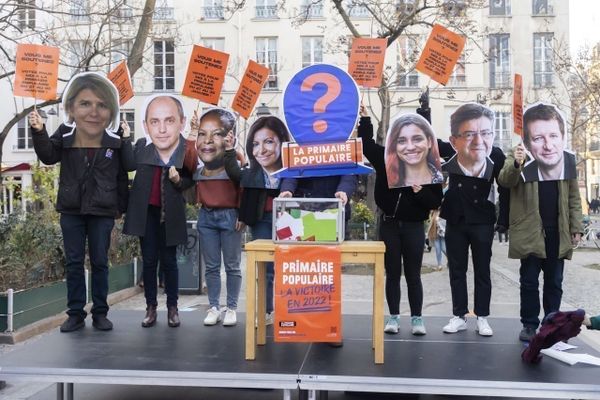
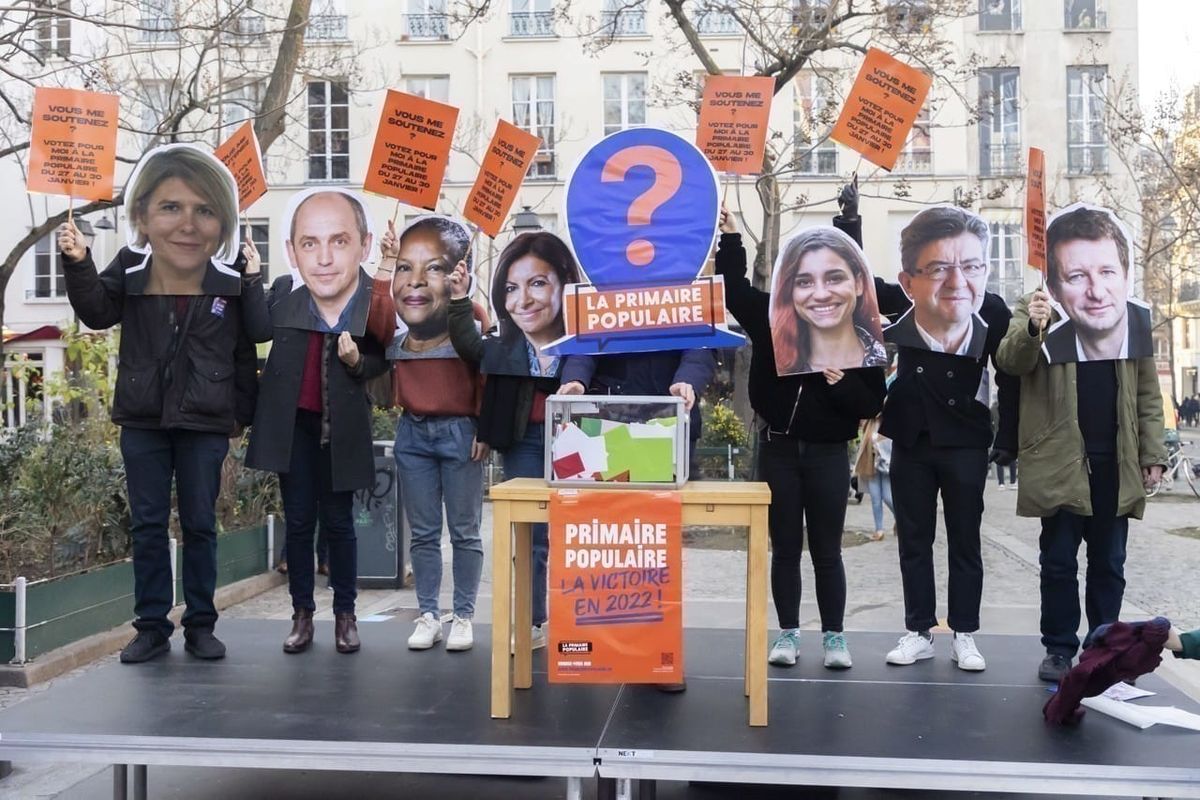
This distinction shaped the political sequence from 2021 to 2024. In 2021, Mathilde Imer and I founded the People’s Primary, alongside activists from social, ecological and democratic movements, to prevent the Left from entering the 2022 presidential election divided among four principal candidates: Anne Hidalgo for the Socialist Party, Fabien Roussel for the Communist Party, Yannick Jadot for the Greens and Jean-Luc Mélenchon for La France Insoumise. We failed to secure a joint presidential candidacy, but by mobilising 540,000 people and making unity a national political demand, the initiative helped create the conditions in which an alliance could no longer be dismissed as unrealistic. After the presidential election, the same forces—La France Insoumise, the Socialists, the Communists and the Greens—formed NUPES, the New Ecological and Social People’s Union, around a common programme and joint candidates for the June 2022 legislative elections. The People’s Primary did not create NUPES by itself, but it helped prepare its political and civic ground.
Two years later, after President Emmanuel Macron dissolved the National Assembly following the 2024 European elections, these parties reunited—this time alongside other left-wing forces—as the New Popular Front. Within days, they agreed on a common programme and fielded one candidate in almost every constituency for the snap legislative elections. Once again, unity that had appeared impossible became unavoidable when the threat of a far-right parliamentary majority became immediate.
The People's Primary experience
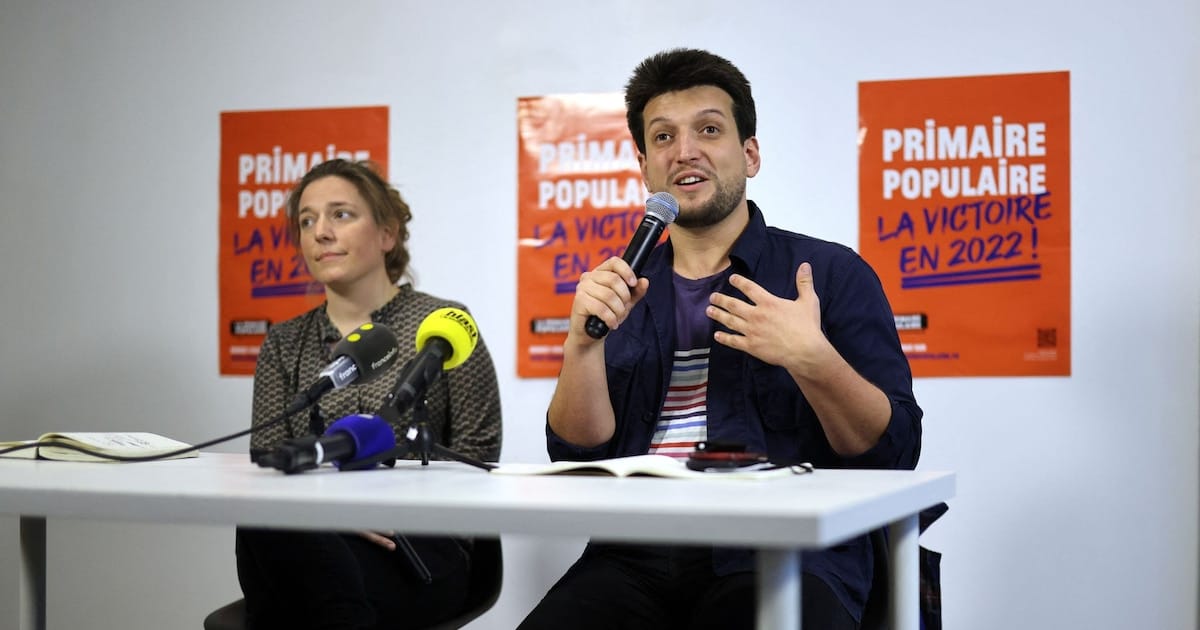
During the 2022 French presidential campaign, I spent hundreds of hours in meetings with party officials, activists, trade unionists, environmentalists, feminists, anti-racist organisers and members of civil society organisations. Through the People’s Primary, we wanted to prevent the Left from fragmenting yet again and to bring about a joint presidential candidacy. The initiative mobilised 540,000 voters and received almost daily media coverage. For several weeks, left-wing unity was no longer a concern confined to party headquarters: it had become a national issue.
On paper, our intuition was simple: faced with the social emergency, climate breakdown and the rise of the far right, no party could win alone. Yet in our meetings, we spent as much time discussing positions, procedures, candidacies and old wounds as we did discussing how to transform the country.
I remember online meetings where we suggested beginning with a few minutes of listening, allowing everyone to say how they were arriving in the room. Some political leaders called us dreamers, too soft, or too close to start-up culture. To them, serious politics was necessarily brutal. Power struggles were real; caring for relationships seemed naive.
Despite this, we brought together people from seventeen organisations and identified common ground across four major political programmes. But we did not secure unity before the presidential election. After the Left was eliminated in the first round, the same parties formed NUPES, the New Ecological and Social People’s Union, for the parliamentary elections. What had been presented as unrealistic suddenly became indispensable.
That experience left me with one conviction and one question. The conviction is that unity becomes possible when necessity is undeniable. The question is: why must we always wait for disaster before building it?
First strategic premise: recognise that this is an exceptional period
French politics is still often organised as if the routine alternation of governments could continue indefinitely. Each party protects its identity, measures its influence and prepares for the next election. But this is not an ordinary period. Climate breakdown threatens the very conditions of a dignified life. Inequality concentrates wealth and power in a few hands. The far right turns social insecurity into hostility towards foreigners, Muslims, minorities and everyone it portrays as standing outside the nation.
French history offers a useful precedent. In 1876, five years after an overwhelming monarchist victory, conservative, moderate and radical republicans fielded a single candidate in each constituency. Their disagreements were immense, but they understood that the survival of the Republic mattered more than their competition. Their victory paved the way for major republican freedoms involving the press, education, trade unions, associations and freedom of conscience. The lesson is not to reproduce that coalition. It is to recognise that an exceptional period changes the hierarchy of our disagreements.
Second strategic premise: see political tripolarisation for what it is
I call our two adversaries “the extremism of money” and the far right. The first ranks human beings according to what they own; the second according to what they are presumed to be. One separates rich from poor, the other the “real” nationals from everyone else. They are not identical, but they feed one another: social abandonment produces fear, and that fear can be redirected towards people more vulnerable than ourselves.
Between these two projects lies a third camp: one committed to an ecological, democratic and social society in which dignity depends neither on wealth, origin, religion nor gender. This camp already exists everywhere. It lives within left-wing parties, but also within trade unions, associations, neighbourhood groups, climate movements, cooperatives and everyday acts of solidarity. Its primary problem is not a lack of ideas. It is its inability to recognise and organise itself as one camp.
This struggle for power also takes place through information. When a handful of owners can set the media agenda and shift the boundaries of what appears acceptable, the extremism of money wields cultural power that benefits the far right. Defending independent and pluralistic media, with legal structures that protect editorial teams, is therefore not a peripheral concern. It is a condition for democratic competition.
Our first mistake: believing that an agreement would be enough
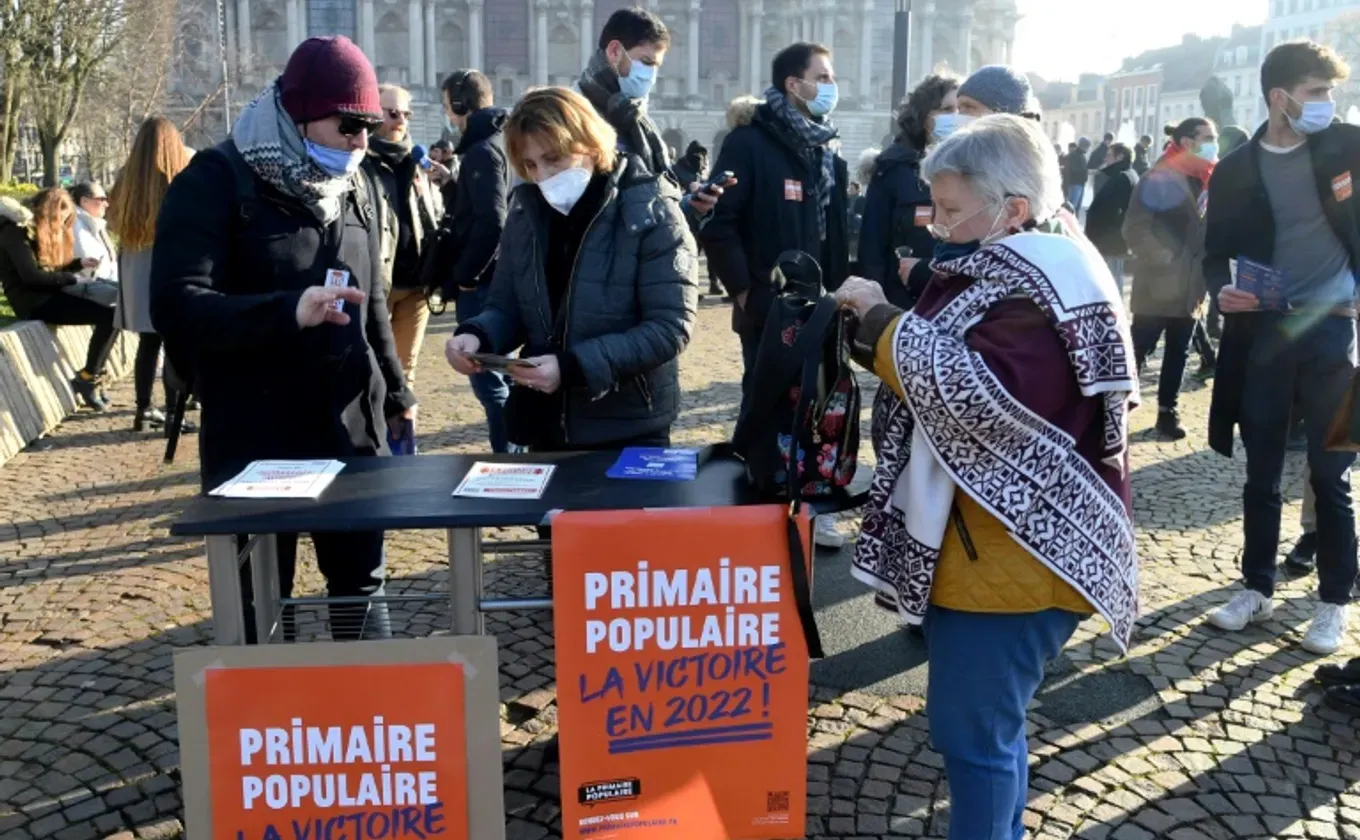
Through the People’s Primary, we worked extensively on shared rules and proposals. We thought that demonstrating the proximity between the parties’ programmes and voters’ desire for unity would make an agreement inevitable. We underestimated two things: the strength of party machinery and the depth of political cultures.
A party protects more than ideas. It also protects a history, employees, elected representatives and its position within the political landscape. Calling for unity without acknowledging those interests could amount to asking an organisation to risk its survival for an uncertain collective benefit. At the same time, several parties treated civil society as a reservoir of volunteers, votes or demonstrators, rather than as a legitimate partner in decision-making.
Power therefore lay less in the quality of our arguments than in each organisation’s capacity to say no, wait and wear us down. We had moral authority, 540,000 people mobilised and an omnipresence in the media; the parties controlled the candidacies, funding and nominations. At times, we confused visibility and mobilisation with institutional power. The scale of the People’s Primary gave us unquestionable legitimacy to raise the question of unity, but not the power to impose the answer.
I would repeat the patient work of building convergence. I would not repeat the mistake of believing that a good procedure alone can overcome interests and political cultures. A coalition must speak frankly about each actor’s power: who decides, who can block, who takes the risk and who receives the benefit? When these questions remain hidden, they always end up governing the coalition.
Third strategic premise: do not start again from a blank page
Our work also showed that the Left did not lack a shared programme. L’Avenir en commun - the programme initially developed by La France Insoumise - followed by NUPES’s 650 policy proposals, had already established a substantial common foundation. Everything could be amended and improved, but reopening every debate from the beginning each time amounted to organising our own powerlessness.
Taking this foundation as a starting point does not mean accepting the ownership or hegemony of one party. The 22% won by Jean-Luc Mélenchon in 2022 belonged to an electoral coalition far broader than La France Insoumise. Socialists, Greens, Communists and people unaffiliated with any party voted for the candidate best placed to qualify for the second round. A programme can serve as a common starting point without the organisation that first carried it becoming the owner of the entire camp.
Civil society must be able to amend that foundation in the light of lived experience. But the debate should begin with “What should we improve?” rather than “Who will succeed in imposing their programme on everyone else?”
Civil society must no longer be the support team
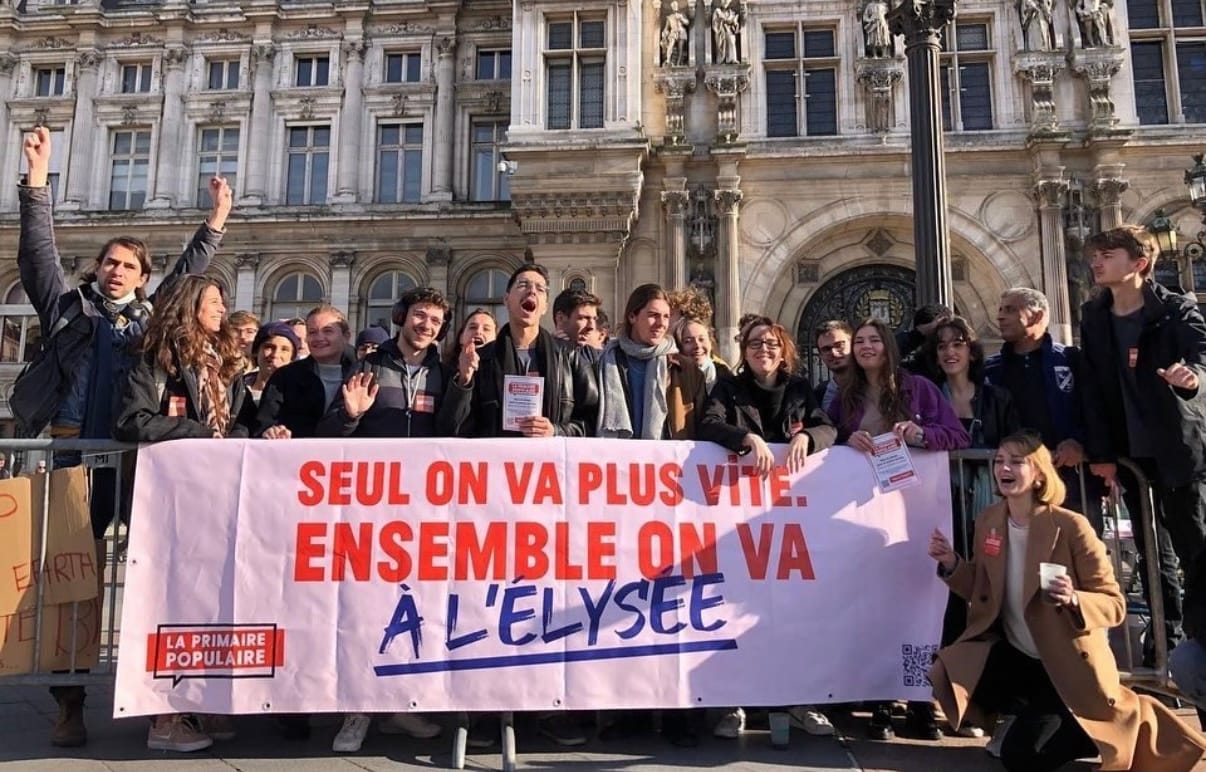
The main lesson I draw from our failure is that left-wing unity cannot be merely a negotiation between political parties. It must become an alliance between political forces and organised civil society.
This is not about replacing parties, which are necessary to field candidates, make laws and govern. But associations understand the consequences of public policy; trade unions understand work; anti-racist groups see what institutions fail to see; climate movements remind us of physical limits that electoral timetables postpone; and cooperatives are already testing different ways of producing and deciding.
Inviting these actors to applaud a programme that has already been written is not power-sharing. A future coalition should reserve places for them in its deliberative bodies, in drafting its programme and among some of its candidates. It should also create permanent local spaces where people can work together between elections.
This opening demands reciprocity. Civil society must accept responsibility for compromise, budgets and implementation. It is easier to make demands than to govern. Parties, for their part, must accept that experience cannot be measured only by the number of years someone has spent inside a party organisation.
Fourth strategic premise: align the project, behaviour and narrative
Internal culture determines what a coalition becomes under pressure. An organisation that promises democracy while humiliating its partners, defends equality while concentrating every decision, or speaks about care while exhausting its activists destroys its own story.
In our meetings, we were right to propose listening, rules for disagreement and a culture of cooperation. We were sometimes wrong to present kindness as though it could replace power. It cannot. But power struggles do not remove the need to build trust. The lesson is to hold both together: name interests without brutalising people; organise disagreement without turning partners into enemies.
Today, I would begin with five practical commitments: a limited but binding common programme; genuinely plural leadership; guaranteed representation for trade unions, associations and movements; transparent rules for decision-making and conflict resolution; and a shared discipline prohibiting personal attacks and anonymous score-settling through the media.
Fifth strategic premise: organise unity in diversity
The French Left sometimes believes that people must resemble one another to move forward together. When disagreement arises, some see betrayal; when one organisation occupies more space, the others fear being erased. We then oscillate between the hegemony of one party and the fragmentation of all.
We must hold two statements together: unity is not uniformity, and diversity is not division. Unity does not require us to erase the differences between Socialists, Greens, Communists, citizens’ movements and trade unions. A strong coalition gives conflict a framework. It distinguishes between the common foundation that binds everyone, issues that remain open for debate and boundaries that would make cooperation impossible. It allows us to say publicly: “We disagree on this issue, but we will govern together on that one.”
I do not know whether this would be enough to win. Our experience taught me to be wary of formulas. But I do know what will almost certainly lead to defeat: waiting for one party to become strong enough on its own, treating every disagreement as a rupture, and summoning civil society only when a public square needs to be filled.
Unity is not merely an electoral strategy. It is already a proposal for society. If we cannot share power among our own organisations, why should citizens believe that we will redistribute it across the country? If, on the other hand, we learn to cooperate without erasing our differences, we will demonstrate what a just society could look like: not a society without conflict, but one that refuses to let money or identity alone determine the value of a life.